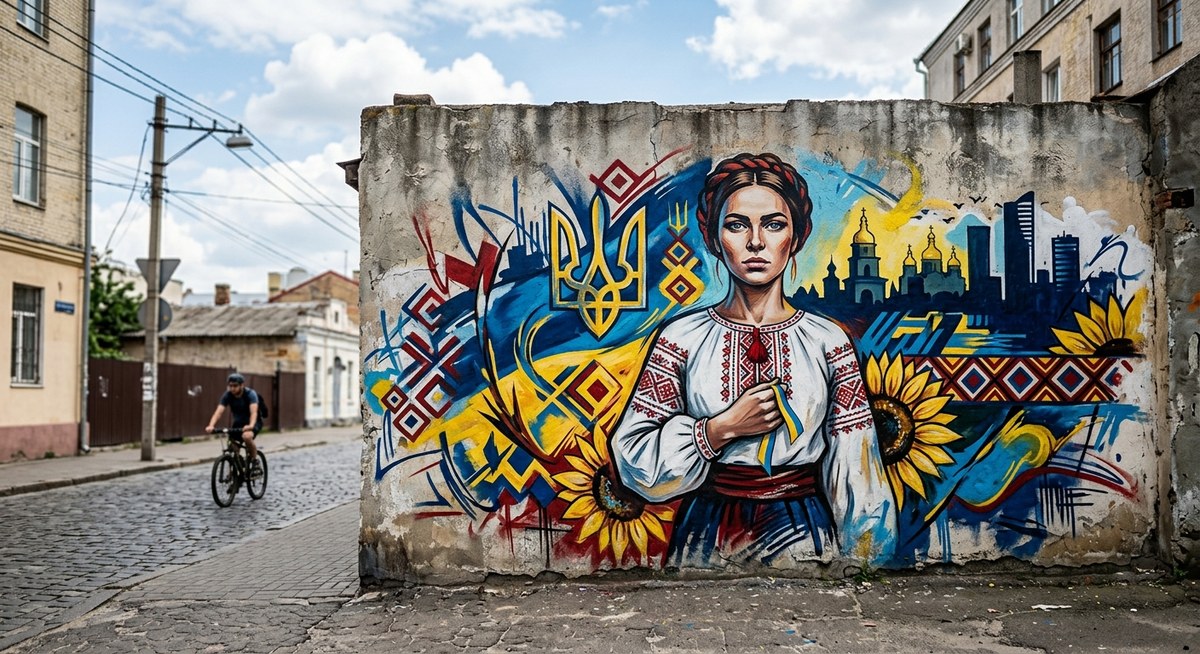
Walls in Ukraine tell a story that goes far beyond paint and color. In cities and towns across the country, murals, graffiti, and wall poetry have become a loud and visual form of protest. They speak to the public at scale, sometimes whispering and at other times shouting, about courage, loss, and the stubborn hope that keeps communities moving forward. This is not just about art on a wall; it is about art as a collective act of resistance, memory, and nationhood. Welcome to a closer look at how street art grew into a powerful protest language in Ukraine, how it evolved through moments of upheaval, and what it means for culture and society today.
Roots and Evolution of Street Art in Ukraine
Ukraine has a long and varied history with public art. In the late 20th century, after the fall of the Soviet Union, urban spaces began to open up to new forms of expression. Street art emerged from a mix of graffiti writers, graphic designers, and students who found in public space a canvas for ideas that could not easily find a home in official channels. Over time, walls became notebooks for the public, filled with messages about identity, autonomy, and the challenges of a nation redefining itself.
Key elements shaped the street art landscape in Ukraine
– A sense of place: Murals often reference local histories, landscapes, and shared memories that resonate with residents.
– Collaboration: Many works are the product of collective effort, with artists feeding off each other to craft more impactful pieces.
– Ephemerality and memory: Walls change, but the images endure as memory codes for communities.
Early Ukrainian street art blended humor, myth, and social commentary. It was a way to reclaim space, to say that public space belongs to the people, and to turn blank walls into open conversations.
Early influences that helped shape protest art
- Public square culture: Squares and streets became canvases for civic expression during times of political change.
- International street art trends: Global graffiti and mural movements inspired Ukrainian artists to experiment with scale and storytelling.
- Local folklore and symbolism: Traditional motifs civilly merged with modern protest messages, creating a distinctive Ukrainian visual language.
This shared foundation made it possible for street art to evolve from decorative pieces to powerful protest statements during later chapters of Ukraine’s history.
Protest Art: The Orange Revolution and Euromaidan
The late 2000s and early 2010s marked a turning point when street art in Ukraine began to carry very explicit political weight. The Orange Revolution and Euromaidan were moments when public space became a forum for collective demand for better governance, transparency, and alignment with European norms. Murals and street performances turned into visible messages that complemented grassroots organizing.
Walls as a Mechanism of Conviction
- Visual storytelling: Large murals captured complex political moments in single frames that were easy to share and understand.
- Public forums: Walls invited people to debate, discuss, and reflect on national direction in the very spaces where daily life unfolds.
- Endurance and risk: Artists faced legal pressure and social risk, but the urgency of the messages often outweighed the costs.
The Power of Collective Visuals
- Shared symbols: National colors, invocations to unity, and images of ordinary people became unifying symbols.
- Community involvement: Residents, students, and volunteers joined in creating art that represented communal hopes and fears.
- Media amplification: Murals and street art absorbed and amplified media coverage, turning public art into a narrative that extended beyond city limits.
During Euromaidan, this form of protest transcended regional divides. Walls in Kyiv and other cities became living archives of the movement, preserving moments of solidarity for future generations.
Artists Who Brought Protest Street Art to Life in Ukraine
Some artists stood at the center of Ukraine’s protest art narrative, using walls to convey resilience, hope, and national identity.
Sasha Korban: Symbol of Hope
Sasha Korban is known for portraits that celebrate local resilience. His works often depict everyday people as heroes, reminding viewers that courage is found in shared experiences and everyday acts of defiance.
Hamlet Zinkivskyi: A Short Poem on the Wall
Zinkivskyi blends text with imagery to craft micro-poems that convey a lot in a single glance. His pieces invite viewers to pause and read, turning walls into lyric spaces that echo long after the eyes move on.
Interesni Kazki (Waone and AEC): Surrealism of the People
The collective Interesni Kazki brings a dreamlike, surreal approach that merges fantasy with social commentary. Their murals invite interpretation while keeping a clear through line of human dignity and collective memory.
Other notable voices
- Local muralists who document frontline experiences and refugee stories.
- Community artists who transform abandoned spaces into memorials and viewpoints.
- Young artists experimenting with digital media and public art to reach new audiences.
What unites these voices is a belief that art in public spaces belongs to everyone. The wall becomes a shared page on which communities write their own future.
Symbolism in Murals: Color, Image, Emotion of Street Art in Ukraine
Mural symbolism in Ukraine is layered and meaningful. Color choices, iconography, and composition work together to convey emotions that words cannot always express.
Flag and Nationalism
- Use of blue and yellow to evoke national pride and unity.
- Imagery that reframes the flag from a simple symbol into a lived experience of freedom and resilience.
Images of Trauma and Hope
- War scars translated into art: shattered structures, empty chairs, and silhouettes of families reflect collective trauma.
- Buffers against despair: bright colors, uplifting figures, and hopeful landscapes offer emotional relief and assurance.
Heroes, Soldiers, and Voices of the People
- Murals honoring soldiers and civilians who contributed to the defense and resilience of communities.
- Portraits of ordinary people who became symbols of courage during times of crisis.
Symbolism in Ukrainian protest art is not one note. It is a chorus of colors, images, and stories that together tell a nation’s journey through hardship toward a sense of shared belonging.
Street Art During War Time in Ukraine
When conflict intensified, street art took on new roles. It became a way to document memory, provide solace, and communicate messages when other channels were blocked or silenced.
Crimea and Donbas: Paint of Conviction
In areas affected by annexation and conflict, murals carried political weight and served as reminders of identity, history, and perseverance. They acted as quiet acts of resistance that could be seen, felt, and shared among communities.
Therapy on the Wall
Public art can be a form of emotional therapy. Creating or viewing murals during wartime helps communities process fear, loss, and grief. The wall becomes a space to grieve, cope, and imagine a future beyond immediate danger.
War time murals often carry dual meanings: they honor memory while signaling resilience. They remind both locals and visitors that culture remains a form of resistance and a beacon of hope.
Government and Society’s Reaction to Protest Street Art in Ukraine
Art in public spaces frequently invites scrutiny from authorities. In Ukraine, reactions to protest street art have ranged from protection and celebration to concern about vandalism and political tension.
Preservation or Ban?
- Some murals are officially preserved as part of cultural heritage and are promoted as cultural tourism assets.
- Others face demolition or censorship when authorities fear political escalation or public disruption.
- Local communities often advocate for preservation as a means of cultural memory and education.
Thousands of Eyes: From Vandalism to Art Tourism
- Vandalism can be reinterpreted as street art when the community recognizes its value.
- Art tourism emerges as people travel to see iconic murals, creating economic benefits for neighborhoods and cities.
- Educational programs often accompany murals, turning walls into outdoor classrooms about Ukraine’s history and values.
Street Art as a Tool for Memory and Cultural Continuity
Public art in Ukraine serves as a living archive, preserving memories of people, places, and events that shaped the nation. Murals can commemorate the fallen, celebrate cultural heritage, and teach younger generations about civic responsibility.
- Memory walls honor those who contributed to the country’s freedom and resilience.
- Cultural continuity is strengthened by public art that bridges generations.
- Street art encourages dialogue about national identity and shared values.
Practical Guide for Exploring Street Art in Ukraine
If you are planning a trip or a study focused on protest art, here are practical tips to help you plan a meaningful experience.
- Where to go
- Kyiv: A wide range of murals in central districts and along major boulevards.
- Lviv: A mix of historic architecture and contemporary public art scenes.
- Odesa and other port cities: Mural routes that reflect maritime history and resilience.
-
Donbas-affected towns (where safe and accessible): Murals that reflect the lived experience of conflict.
-
Best times to visit
- Spring and early autumn when weather is mild and outdoor art is most comfortable to explore.
-
Local art festivals and mural days often bring additional works and guided tours.
-
How to learn more
- Use local guides who specialize in street art tours.
- Check city cultural calendars for mural unveilings and walking tours.
-
Explore online maps that document murals and their historical contexts.
-
Safety considerations
- Always check current travel advisories and local guidance.
- Stick to well-lit areas and established tours, especially in regions affected by conflict.
-
Respect artist rights and do not disturb ongoing works.
-
How to document respectfully
- Photograph with permission where required.
- Record the stories behind murals in your own words to keep the memory alive.
-
Share educational notes with your network to spread awareness.
-
Educational angles for researchers and students
- Analyze how color and form convey emotion during different political moments.
- Compare mural cycles across cities to understand regional variations.
- Examine the interplay between street art and formal cultural institutions.
How to Support Street Artists and Public Art
- Patronage and commissions: If possible, commission a mural that tells a community story while supporting local artists.
- Donations to art collectives: Many street art initiatives rely on community funding and volunteer help.
- Educational programs: Join or support workshops that teach youth about mural creation and public art ethics.
- Digital preservation: Document murals through high quality photography and digital mapping to ensure memory outlives the concrete.
The Digital Dimension: Maps, Messaging, and Memory
Ukraine’s street art landscape has a robust digital presence. Artists and communities use online mapping, social media, and encrypted channels to share works, protect artists, and coordinate collaborations.
- Digital mapping helps people find murals and plan art walks with context about each piece.
- Online platforms enable communities to share the stories behind murals and their perspectives on local history.
- Encryption and secure messaging become important in sensitive contexts to protect artists and participants.
If you are curious about how digital tools intersect with street art, look for resources that combine public art with digital heritage and privacy friendly approaches to sharing and preserving works.
Language and Culture: How Street Art Reflects Ukraine’s Linguistic Evolution
Public art often mirrors linguistic shifts and cultural changes. Murals may feature bilingual or multilingual text, regional dialects, and local slang that reveal how language evolves in public life. Street art thus becomes a living laboratory where language and culture intersect in powerful ways, offering insights for scholars, travelers, and art lovers.
A Note on Respect and Context
Visiting protest art sites is a chance to learn and reflect. It is important to approach murals with respect for their creators and the communities they represent. Art often carries collective memory and personal histories. Approaching with curiosity, humility, and a willingness to listen will deepen your understanding and make your visit meaningful.
Conclusion: The Enduring Voice on the Wall
Street art in Ukraine remains a dynamic and evolving form of protest and cultural expression. From the early days of public art that reclaimed space to the modern era where murals document conflict and resilience, it has shown the beauty of public action through public art. The walls speak in colors and symbols, telling stories of hope, memory, and shared humanity. For locals, visitors, scholars, and artists alike, street art offers a tangible connection to a country that continues to weather upheaval with creativity, courage, and community.
If you are exploring Ukraine for cultural insight or planning a street art focused journey, remember that every mural is a conversation. Take time to read the images, listen to the voices they represent, and contribute to the ongoing story that public art carries forward for future generations.