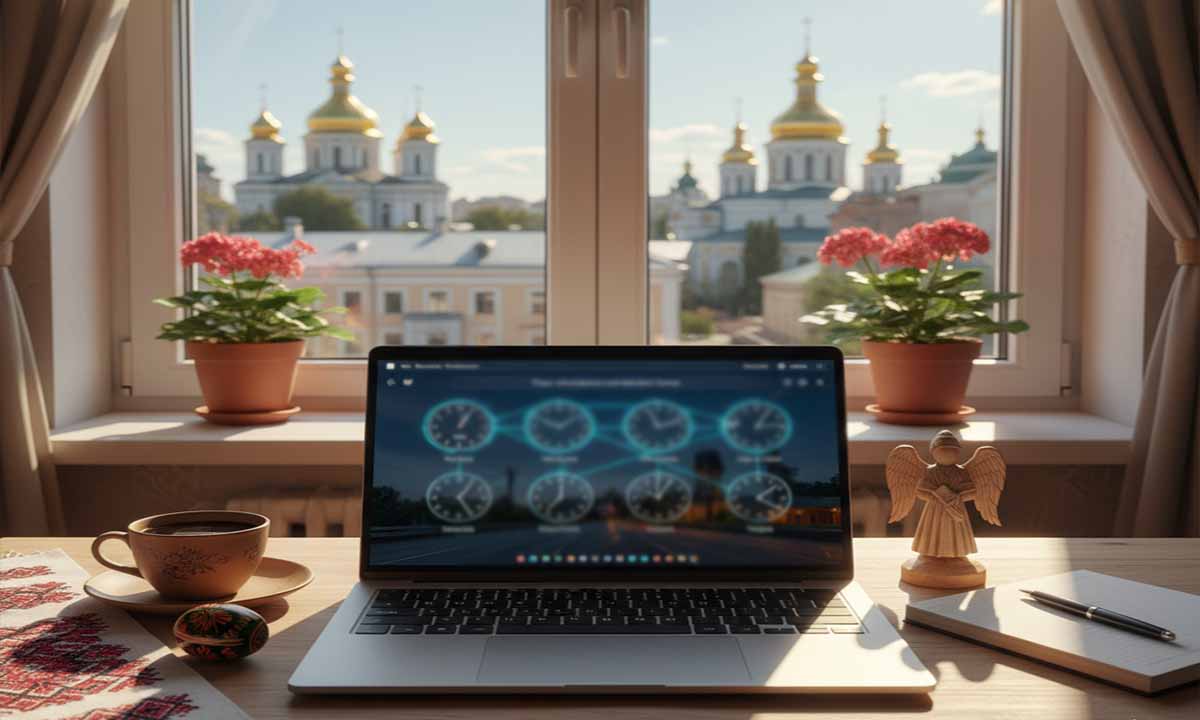
Morning light in Ukraine feels different. Church bells ring. Trams move. Cafes open their doors. Time here is not abstract. It shapes meals, meetings, sleep, and celebration. This guide walks through Ukraine time with warmth and clarity. It blends clocks, weather, sky rhythms, and daily life into one story.
If you want a fast way to compare hours with another country, the time difference calculator helps you do that in seconds. Many visitors check it before flights or video calls. Residents use it to stay in sync with family abroad.
Ukraine follows a single national standard. Details about offsets, daylight changes, and regional notes are gathered neatly on the Ukraine time overview page. It is useful for planning and for curiosity.
Time zones can feel confusing at first. A broader explanation of how global zones connect can be found on the world time zones reference. This context makes Ukraine time easier to grasp.
In the capital, daylight patterns guide daily routines. Sunrise walks and evening dinners depend on the sun. The Kyiv sun schedule shows daily rise and set times that locals often check.
The night sky matters too. Lunar cycles affect fishing, folklore, and even sleep. The Kyiv moon phase page tracks that gentle rhythm.
Weather changes the feel of time itself. Snow slows mornings. Summer heat stretches evenings. Current conditions are easy to follow on the Kyiv weather report.
All of these threads meet in one place. The local clock, sun, moon, and weather align on the Kyiv time hub. Many people bookmark it.
Key Points of Article
- Ukraine follows a clear national time standard with seasonal clock changes
- Daily life moves in rhythm with sunrise and sunset
- Moon phases quietly influence culture and tradition
- Weather strongly shapes how fast or slow days feel
- Knowing these patterns helps travelers adapt and residents stay aligned
How Ukraine Time Is Set
Ukraine uses Eastern European Time for most of the year. During warmer months, clocks shift forward for daylight saving. This gives longer evenings and brighter streets after work. Many people enjoy that extra light.
The change usually happens in spring and autumn. It follows a predictable pattern that locals know well. Visitors sometimes forget. That can lead to early arrivals or late calls. A quick check before travel avoids confusion.
| Standard time | Eastern European Time |
| Summer shift | One hour forward |
| National coverage | Whole country |
Daily Life Shaped by the Clock
Time in Ukraine feels social. Meals happen at shared hours. Offices open early. Markets buzz in the morning. Evenings are for family and friends.
Here are common daily patterns many notice:
- Morning starts early with coffee and bread
- Work hours align with daylight
- Lunch is often quick and simple
- Evenings stretch longer in summer
- Weekends begin with slow mornings
These habits shift slightly with the seasons. Winter mornings start later. Summer nights feel endless.
Sunrise and Sunset Across the Year
Ukraine sits far enough north to feel dramatic light changes. Winter days are short. Summer days glow late into the evening.
In Kyiv, sunrise in June can feel surprisingly early. Sunset can happen close to bedtime. In December, daylight feels precious. People plan errands carefully.
Sun times guide prayer schedules, farming tasks, and outdoor plans. Even city dwellers feel this pull.
The Moon and Cultural Rhythm
The moon holds a quiet place in Ukrainian culture. Folklore speaks of its power. Some gardeners plant by it. Fishers watch it closely.
Full moons light village roads. New moons darken the countryside. Urban areas notice it less, but the feeling remains.
| New moon | Dark skies and calm nights |
| Full moon | Bright evenings and strong folklore |
| Quarter phases | Balanced light and shadow |
Weather and the Feeling of Time
Weather changes how time feels in Ukraine. Snow slows footsteps. Heat invites long pauses. Rain softens city noise.
Winter can feel still. Days are shorter. People move indoors. Tea and soup become rituals.
Spring arrives with mud and hope. Summer feels expansive. Autumn smells of leaves and smoke.
| Season | Time feeling |
| Winter | Quiet and focused |
| Spring | Restless and fresh |
| Summer | Long and social |
| Autumn | Reflective and calm |
Time for Travelers
Visitors often notice how punctual Ukraine can be. Trains run on schedule. Buses leave on time. Arriving late feels awkward.
A few practical tips help:
- Check clock changes before arrival
- Plan outdoor sights by daylight
- Allow extra time in winter
Adapting to local time takes a day or two. After that, the rhythm feels natural.
Time for Residents
For those living in Ukraine, time connects memory and routine. School bells. Holiday mornings. Long summer nights with friends.
Many families plan around light rather than strict hours. Children play outside until sunset. Elders wake with dawn.
| Morning | Quiet focus |
| Afternoon | Work and errands |
| Evening | Social time |
Festivals and Seasonal Time
Holidays follow the calendar and the sun. Orthodox celebrations often follow older timekeeping traditions. This adds depth to the year.
Summer festivals start late. Winter ones gather early. Fireworks feel brighter against long nights.
Digital Time and Modern Life
Phones and computers keep Ukraine connected. International calls rely on accurate clocks. Remote work makes time awareness vital.
Many people keep two clocks in mind. Local hours and foreign hours. It becomes second nature.
A Sense of Time That Stays With You
Understanding Ukraine time means more than reading a clock. It means noticing light on stone streets. Feeling how weather stretches or compresses a day. Watching the moon rise over rooftops.
For travelers, this awareness brings comfort. For residents, it brings continuity. Time here is steady. It moves with seasons, people, and sky.